Asteroid prospecting research

Researching which asteroids are worth the trip

Near Earth AI is an early-stage research company. We're developing the concepts and early software for survey-first asteroid prospecting: how to survey, characterize, and rank near-Earth asteroids, then confirm with micro-samples before anything is extracted.

Survey
Characterize
Rank targets
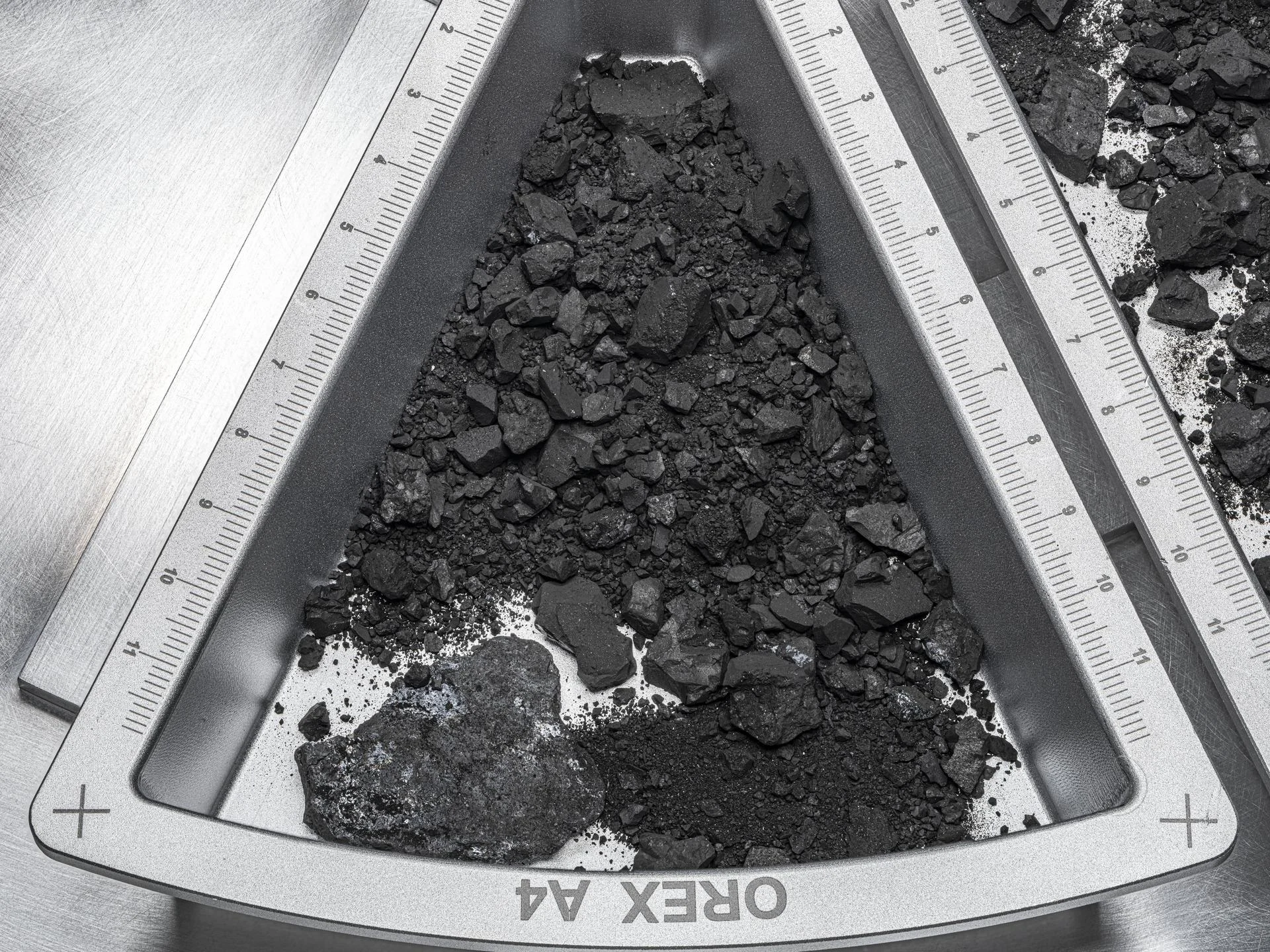
Rocks and dust from asteroid Bennu in a sample tray marked in centimeters
NASA ASTEROID SAMPLEBennu, OSIRIS-REx mission
Rocks and dust from asteroid Bennu, returned by NASA's OSIRIS-REx in 2023. Image: NASA/Erika Blumenfeld and Joseph Aebersold.

Where we are today

We haven't surveyed or found any asteroids yet. Here is the research we're doing now, and what has to happen before anything is extracted.

Now

Research and concepts

  • Researching how public catalog data could be used to shortlist and rank near-Earth asteroids, with early software to test the idea.
  • Simulating close-range survey plans: coverage, trajectories, and task allocation across small craft.
  • Early lab testing of sensor and lightweight hardware concepts.
Next

First survey missions

  • Choose first targets and fly lightweight survey craft to them.
  • Map shape, surface, and composition with spectral, lidar, magnetic, and gravity data.
  • Feed real measurements back into the ranking models.
Later

Validation, then extraction

  • Confirm the strongest zones with micro-samples.
  • Design extraction only for targets the evidence supports.

We'll share research notes and early test results on our research page as they're ready.

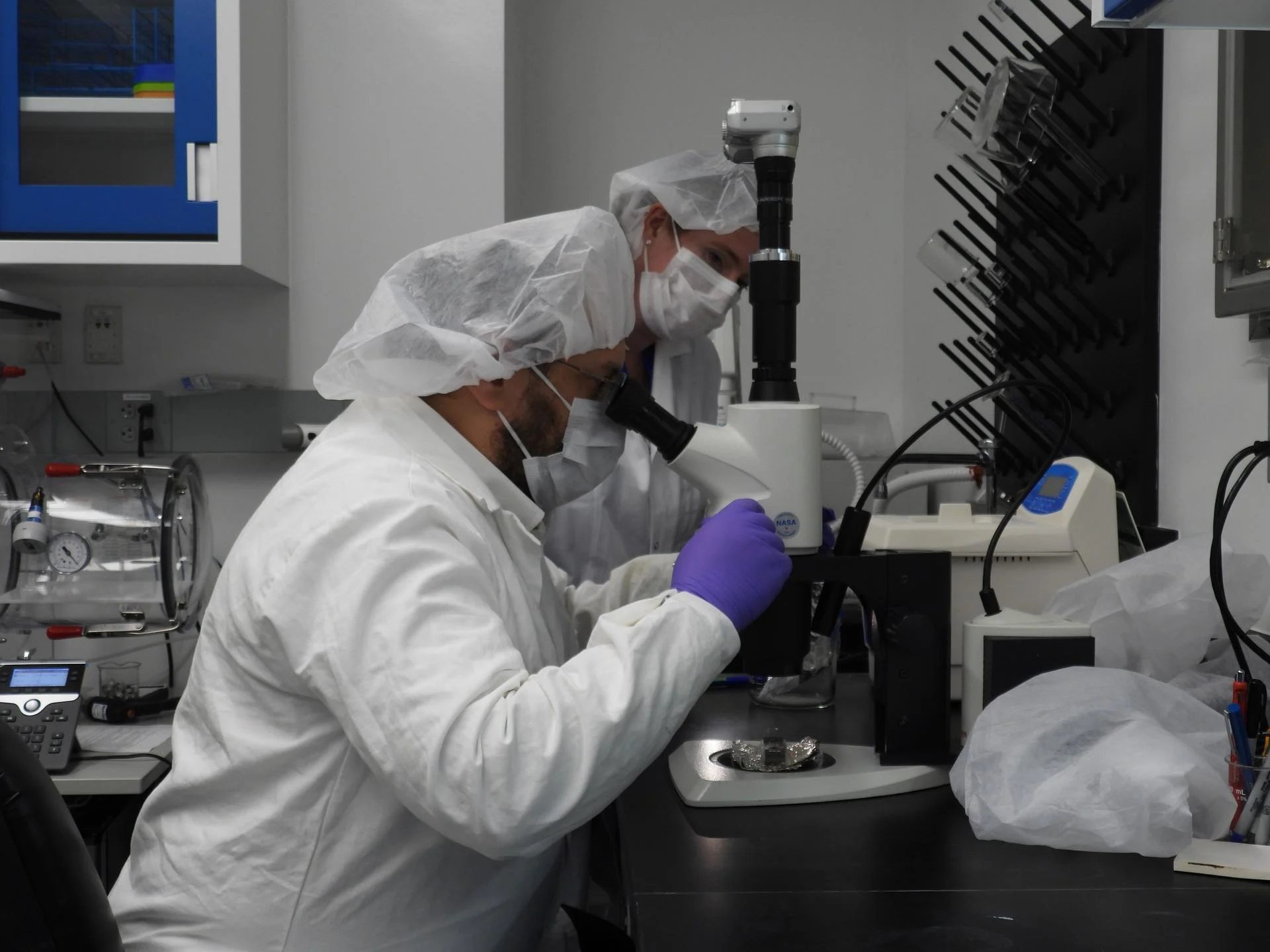
OSIRIS-REx project scientist Jason Dworkin, in a lab coat, hair cover, mask and gloves, examining part of the asteroid Bennu sample under a microscope
OSIRIS-REx project scientist Jason Dworkin examines part of the Bennu sample at NASA Goddard. Image: NASA/Molly Wasser.

Choosing the target is the expensive question

Tens of thousands of near-Earth asteroids are known, yet the two sample-return missions to near-Earth asteroids this decade brought back grams, each after years of flight. Before anyone extracts anything, someone has to work out which asteroids are worth visiting. That is the question our research focuses on.

42,000+
near-Earth asteroids are known today
Source: NASA JPL Small-Body Database
121.6 g
of asteroid Bennu returned to Earth by NASA's OSIRIS-REx in 2023
Source: NASA
5.4 g
of asteroid Ryugu returned by JAXA's Hayabusa2
Source: NASA
About 69%
of world rare-earth mine production came from China in 2024
Source: USGS Mineral Commodity Summaries 2025

Our approach

How we plan to choose targets

This is the approach we're researching. Our current work explores the first two steps in early software and simulation. We haven't ranked a real target yet: mapping and ranking need data from survey craft that haven't flown.

01

Target identification

Analyze telescope and catalog data to shortlist candidate near-Earth asteroids.

02

Survey planning

Simulate close-range trajectories, coverage, communications, and task allocation across small craft.

03

Multi-sensor mapping

Combine lidar, spectral, magnetic, gravity, and visual observations into one resource map.

04

Resource ranking

Compare confidence, accessibility, rare-earth potential, composition, and mission constraints before validation.

Scientific orbital survey planning and target-ranking diagram

Follow the work as it happens

Get our research notes, software progress, and lab results by email. A few messages a year, no hype.