Surface survey
Map terrain, slopes, illumination, and candidate material signatures to guide site selection.
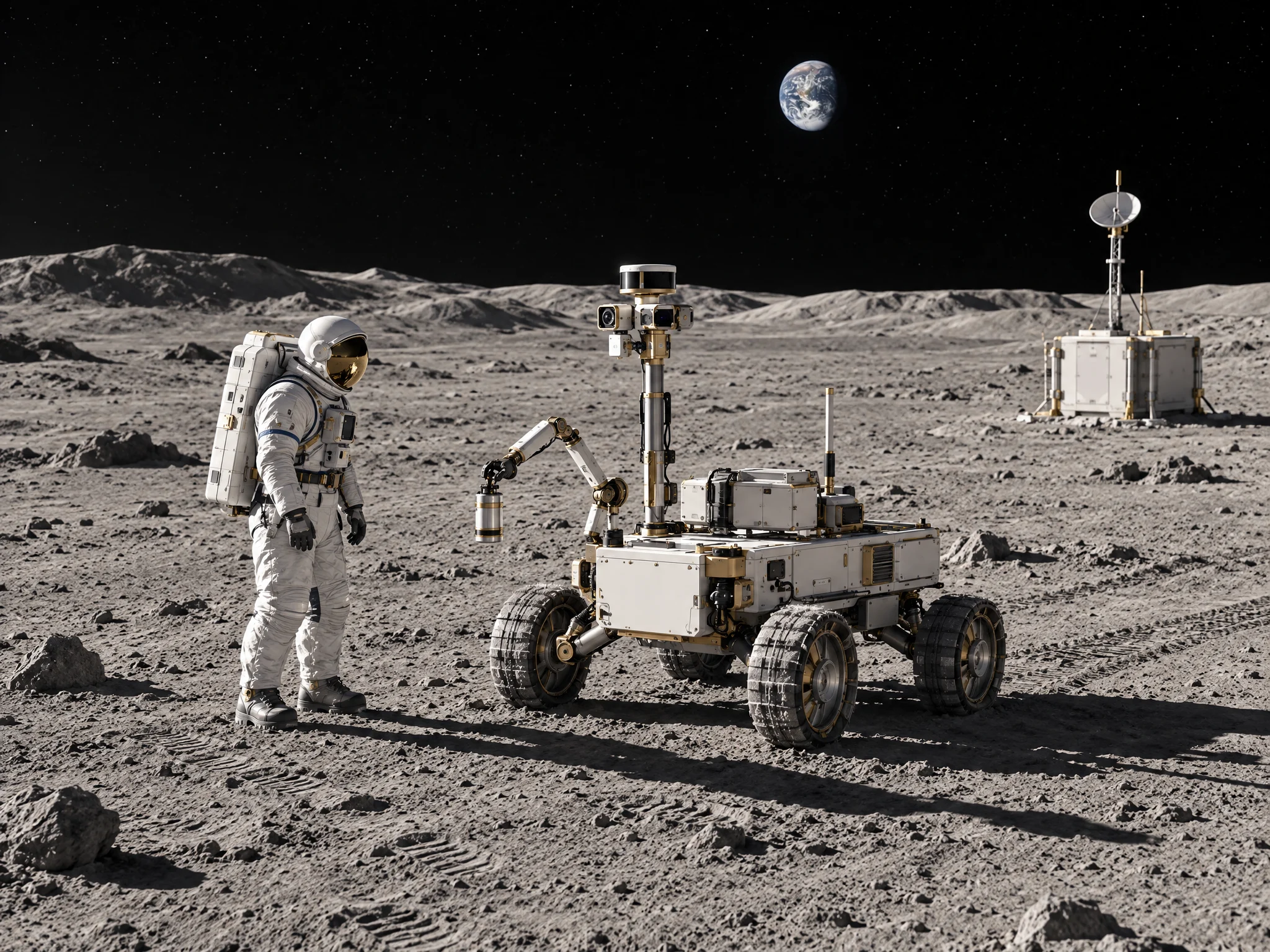
Bringing our survey-first approach to lunar surface work. The direction connects terrain mapping, robotic inspection, and small-sample validation before larger infrastructure is considered. These are planned applications, not claims of deployed lunar systems.
Overview / Lunar operations
A future lunar surface operations direction combining site survey, robotic inspection, small-sample validation, and controlled material handling.
Map terrain, slopes, illumination, and candidate material signatures to guide site selection.
Study rover-based inspection and instrument placement with human oversight and onboard fault handling.
Plan small, traceable samples to test resource hypotheses before extraction or processing decisions.

Fieldwork / Evidence first
Orbital observations would guide surface surveys, followed by rover inspection and targeted micro-sampling. Spectral measurements can suggest composition, but laboratory analysis is needed to validate it. Potential rare-earth elements, strategic metals, and other feedstocks remain hypotheses until supported by evidence.
Engineering / Surface readiness
Lunar operations must account for abrasive dust, vacuum, radiation, temperature extremes, power availability, and communication gaps. Surface mobility requires lunar-specific systems, not atmospheric drones. Environmental testing and mission-specific demonstrations would precede deployment.
Next / Lunar operations
Discuss the site, instruments, sampling goals, and validation needed for a focused lunar operations concept.