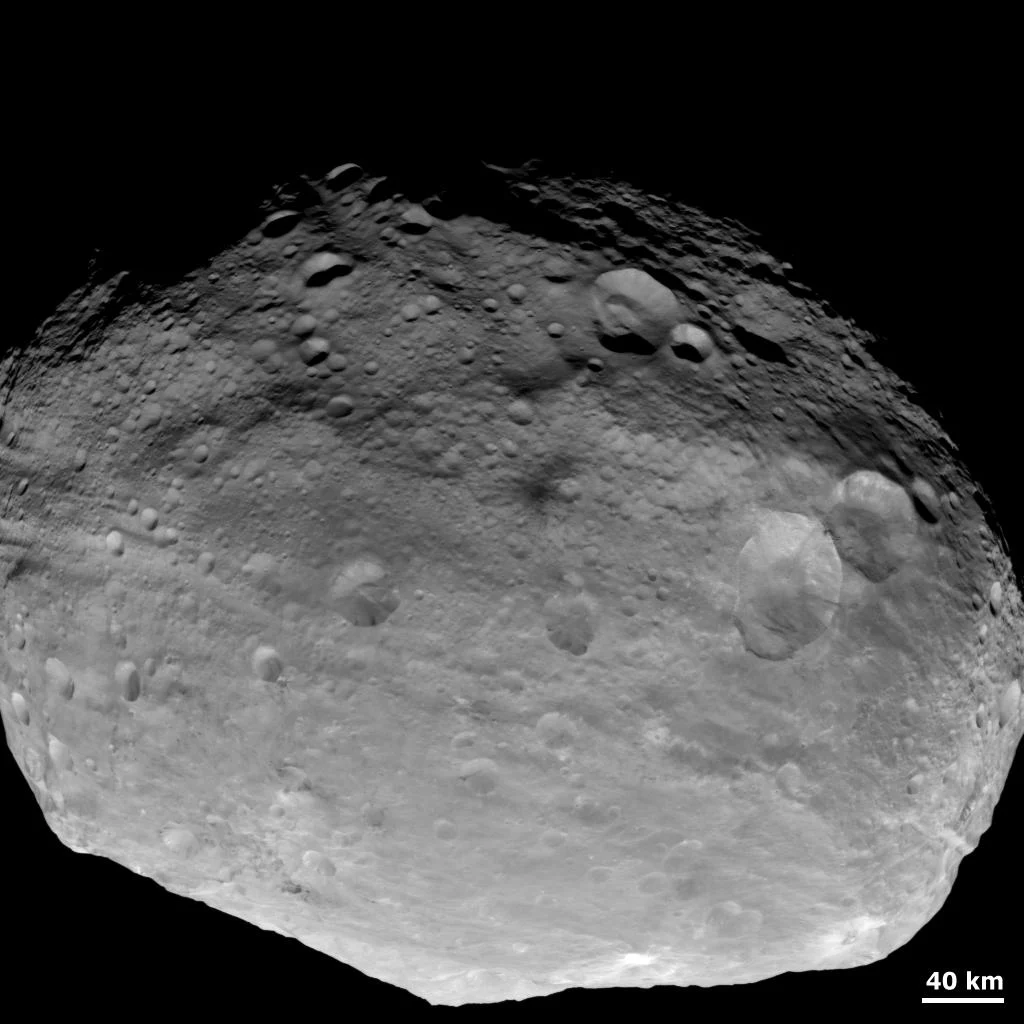
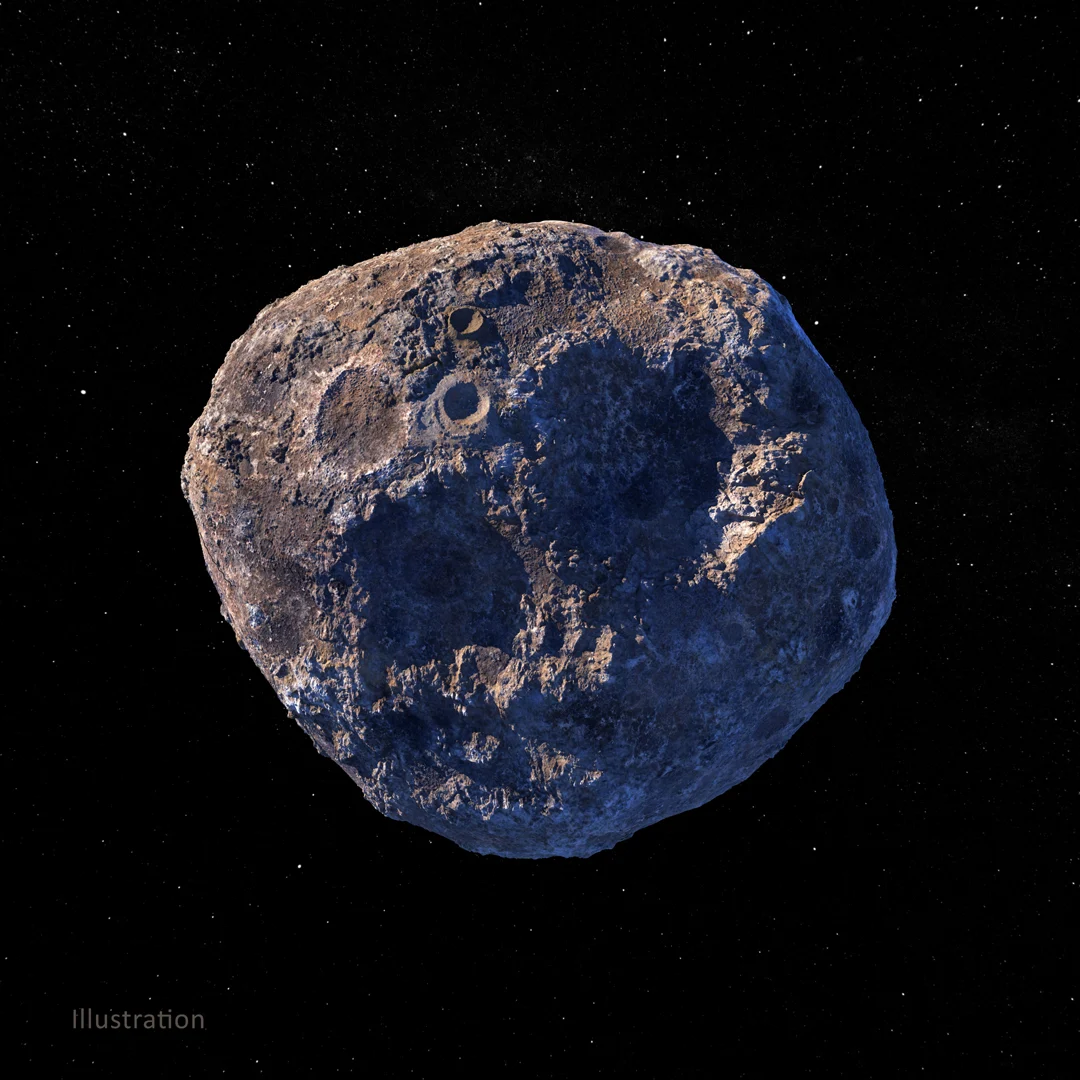
Why survey first: how remote sensing narrows asteroid resource targets
Telescopes, orbiting instruments, and small samples each answer different questions about an asteroid. How the layers fit together, using missions NASA, JAXA, and ESA have flown.
Most talk about asteroid mining starts with extraction: drills, processing plants, return vehicles. The harder problem comes earlier. We do not yet know what most asteroids are made of. Remote sensing, first from Earth and then from spacecraft, is how researchers turn a list of thousands of objects into a few candidates worth sampling.
This article explains what each layer of remote sensing can and cannot tell you, using instruments that NASA, JAXA, and ESA have already flown or launched. It ends with why a survey-first order of work makes sense for anyone interested in asteroid resources.
Why the question matters
Interest in space resources often comes back to strategic materials such as rare earth elements. The U.S. Geological Survey estimates world rare earth mine production at 390,000 metric tons of rare earth oxide in 2025, with China producing 270,000 tons, roughly 69% of the total. Magnets are the leading global use. From 2021 through 2024, 71% of U.S. imports of rare earth compounds and metals came from China, and in April 2025 China tightened export controls on several rare earth elements, including samarium, gadolinium, terbium, dysprosium, lutetium, scandium, and yttrium (USGS Mineral Commodity Summaries 2026).
Those numbers explain the interest. They say nothing about whether any particular asteroid holds useful concentrations of these elements. Answering that requires measurement, and measurement starts far from the asteroid.
Layer 1: telescopes on Earth
Ground and space telescopes discover asteroids and measure their orbits and brightness. For most known near-Earth asteroids, that is all we have. NASA's Center for Near Earth Object Studies (CNEOS) estimates sizes from brightness, assuming the surface reflects 14% of sunlight. Real reflectivity averages about 6% for dark carbon-rich classes and about 20% for brighter stony classes (CNEOS).
That assumption matters. Diameter scales with the inverse square root of reflectivity, so a dark asteroid at 6% is about 1.5 times wider than the 14% estimate suggests, while a bright one at 20% is about 0.84 times as wide. The difference in volume, and therefore in total material, is larger still.
Telescopes can also take reflectance spectra, which sort asteroids into broad classes. But CNEOS notes that "the taxonomic class of most NEAs is unknown" (CNEOS), and the JPL Small-Body Database lists a spectral class for only a few hundred of the more than 42,000 known near-Earth asteroids (JPL SBDB Query API). A class is a hint about surface composition, not a measure of what lies inside.
Layer 2: spacecraft at the asteroid
A spacecraft that stays near an asteroid can stack several independent measurements. Each answers a different question.
| Measurement | What it tells you | Flown or launched example |
|---|---|---|
| Visible and infrared spectroscopy | Surface minerals, such as hydrated clays | OSIRIS-REx OVIRS, 0.4 to 4.3 micrometers (NASA; Hamilton et al. 2019) |
| Thermal infrared | Mineral features and thermal inertia, which relates to particle size and porosity | OSIRIS-REx OTES; Hera TIRI (ESA) |
| Gamma-ray and neutron spectroscopy | Elemental composition | Psyche (NASA) |
| X-ray spectroscopy | Elemental composition of the surface | OSIRIS-REx REXIS (NASA) |
| Laser ranging | Shape and topography | OSIRIS-REx OLA; Hayabusa2 LIDAR; Hera laser rangefinder |
| Radio tracking | Mass, gravity field, and interior structure | Psyche gravity science (NASA) |
| Low-frequency radar | Internal structure | Hera's Juventas CubeSat (Küppers et al. 2022) |
| Magnetometry | Remanent magnetism, a clue to a past metal core | Psyche (NASA) |
Some examples in more detail:
OSIRIS-REx carried three cameras (PolyCam, MapCam, and SamCam), a laser altimeter, visible-infrared and thermal spectrometers, and an X-ray imaging spectrometer (NASA). Its spectrometers found evidence of hydrated minerals across Bennu (Hamilton et al. 2019), which the returned sample later confirmed (Lauretta et al. 2024).
Psyche, launched 13 October 2023, is headed for a metal-rich asteroid in the main belt, not a near-Earth asteroid. Its prime mission is planned to begin in August 2029, with about two years in orbit. It carries a multispectral imager, a gamma-ray and neutron spectrometer to measure elemental composition, a magnetometer to look for remanent magnetism, and uses its X-band radio to map gravity and infer interior structure (NASA; NASA spacecraft page). It is the clearest current example of a mission designed to measure metals remotely.
Hera, ESA's mission to the Didymos binary system, carries a thermal infrared imager supplied by JAXA to map thermal inertia, which indicates surface roughness, particle size, and porosity. Its HyperScout H imaging spectrometer is described by ESA as helping "prospect the asteroid's mineral makeup", and its laser rangefinder measures distances from 10 meters to 20 kilometers with better than 1 meter accuracy (ESA). Its Juventas CubeSat carries a low-frequency radar to probe the interior of the small moon Dimorphos, about 160 meters across (Küppers et al. 2022).
Layer 3: small samples as ground truth
Remote sensing reads a thin outer layer. Sunlight, solar wind, and heating change that layer, so spectra can mislead. At Ryugu, orbital spectra resembled heated or shocked meteorites (Kitazato et al. 2019), while the returned grains matched more pristine CI chondrites (Yokoyama et al. 2022). At Bennu, the sample confirmed every mineral group seen from orbit and added others that had not been identified, including iron and nickel sulfides and unexpected phosphates (Lauretta et al. 2024).
Small samples close that gap. Hayabusa2 returned about 5.4 grams (JAXA) and OSIRIS-REx 121.6 grams (NASA), and both have supported years of detailed lab work.
Why survey first
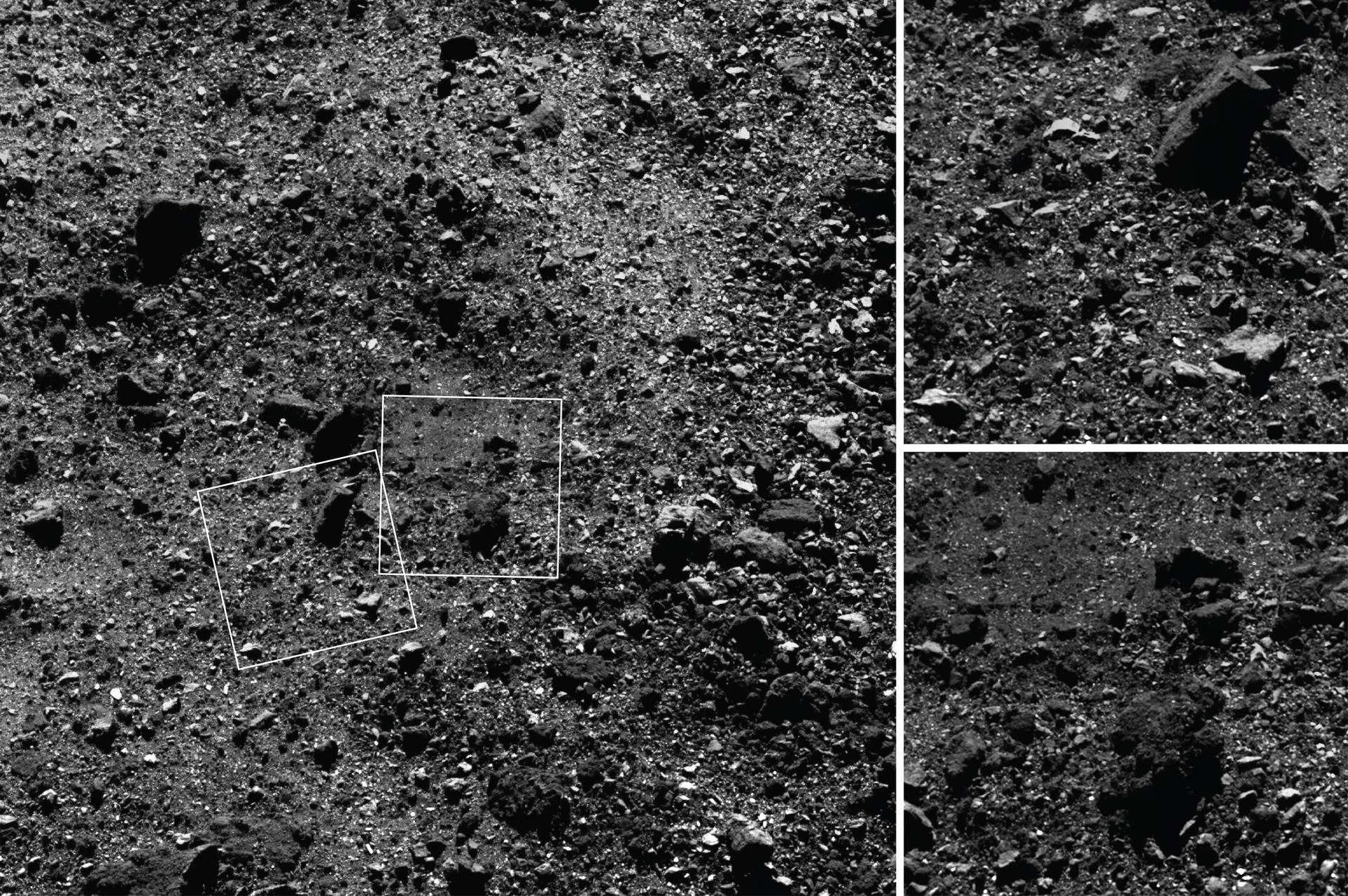
Survey work also takes time, and it changes decisions. OSIRIS-REx arrived at Bennu on 3 December 2018, selected its sample site on 12 December 2019 after about a year of mapping a surface crowded with hazardous boulders, and touched down on 20 October 2020 (NASA). That gap of nearly two years between arrival and contact went into understanding the target well enough to act safely.
Putting the layers together gives an order of work:
- Screen from Earth. Use orbits, brightness, and any available spectra to narrow thousands of objects to accessible candidates, while treating size and class as uncertain.
- Characterize up close. Combine spectral, thermal, elemental, shape, and gravity data so no single measurement drives the decision.
- Rank with uncertainty attached. A useful ranking states how confident each estimate is, not just which target scores highest.
- Validate with micro-samples. Confirm composition in the lab before committing to anything larger.
Extraction belongs at the end of that sequence, after the evidence supports it.
Where Near Earth AI stands
Near Earth AI is an early-stage research and development company. Our concept is a survey-first approach along the lines described above, using lightweight spacecraft to map, measure, and test small samples before any extraction. We are researching how target ranking could combine public catalogs and remote-sensing data, and how prospecting sensors might be designed. We have not found, surveyed, ranked, or sampled any asteroid. The missions and measurements in this article are the work of NASA, JAXA, ESA, USGS, and the researchers cited.
Sources
- U.S. Geological Survey, Mineral Commodity Summaries 2026: Rare Earths. China's share computed from the USGS production figures.
- NASA JPL Center for Near Earth Object Studies, Discovery Statistics: Introduction, accessed 21 October 2026.
- NASA JPL, Small-Body Database Query API, queried 21 October 2026.
- NASA, OSIRIS-REx in depth and OSIRIS-REx mission page, accessed 21 October 2026.
- V. E. Hamilton et al., Evidence for widespread hydrated minerals on asteroid (101955) Bennu, Nature Astronomy 3 (2019).
- NASA, Psyche mission page and Psyche spacecraft and instruments, accessed 21 October 2026.
- ESA, Hera's asteroid deck and instruments, accessed 21 October 2026.
- M. Küppers et al., Hera mission abstract, EPSC2022-192, Europlanet Science Congress 2022.
- K. Kitazato et al., The surface composition of asteroid 162173 Ryugu from Hayabusa2 near-infrared spectroscopy, Science 364 (2019).
- T. Yokoyama et al., Samples returned from the asteroid Ryugu are similar to Ivuna-type carbonaceous meteorites, Science (2022).
- D. S. Lauretta et al., Asteroid (101955) Bennu in the laboratory: Properties of the sample collected by OSIRIS-REx, Meteoritics and Planetary Science (2024).
- JAXA, Asteroid Explorer Hayabusa2, accessed 21 October 2026.