Is asteroid mining possible yet? An honest status check
Is asteroid mining possible yet? A sourced status check on sample returns, failed commercial attempts, open problems, and when asteroid mining could start.
Is asteroid mining possible? Not yet, at least not in any commercial sense. Spacecraft have touched asteroids and returned samples measured in grams, and no company or agency has extracted resources from an asteroid for use or sale. The science and engineering steps that come before mining are under way, but no credible published source gives a firm start date.
This is an honest status check: what has been done, what has not, the main open problems, and what published sources say about timelines. Every figure links to its source.
Is asteroid mining possible today? What has been done
Three asteroid sample-return missions have succeeded, all run by space agencies for science:
| Mission | Agency | Asteroid | Material returned |
|---|---|---|---|
| Hayabusa | JAXA | Itokawa (S-type) | Dust particles (Nakamura et al. 2011) |
| Hayabusa2 | JAXA | Ryugu (C-type) | About 5.4 grams, returned December 2020 (JAXA) |
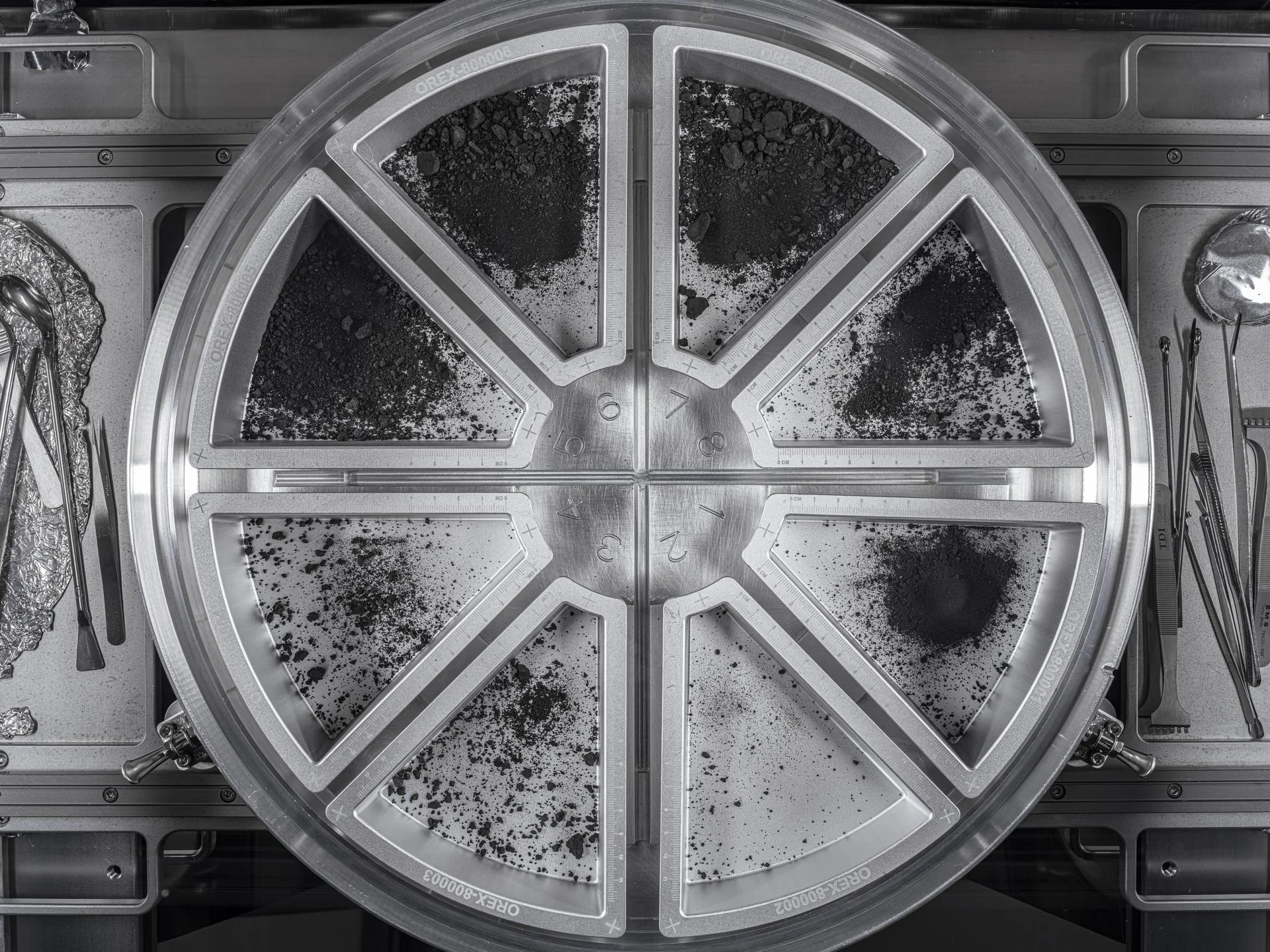
| OSIRIS-REx | NASA | Bennu | 121.6 grams, returned September 2023 (NASA) |
These missions proved several things that any future resource work depends on. Spacecraft can find, orbit, and map small asteroids. They can touch the surface briefly and collect material. Hayabusa2 also fired an impactor to make an artificial crater and then collected material from beneath the surface (JAXA). And remote measurements can correctly predict the broad mineral makeup of a target, as the Bennu sample confirmed (Lauretta et al. 2024).
China launched its first asteroid sample-return mission, Tianwen-2, on 29 May 2025. It is designed to collect samples from the near-Earth asteroid 2016 HO3 and return them to Earth around the end of 2027 (CNSA; Chinese Academy of Sciences).
What has not been done
No extraction. Every gram returned so far was collected for laboratory science. No mission has processed asteroid material into a usable product in space or brought material back for sale.
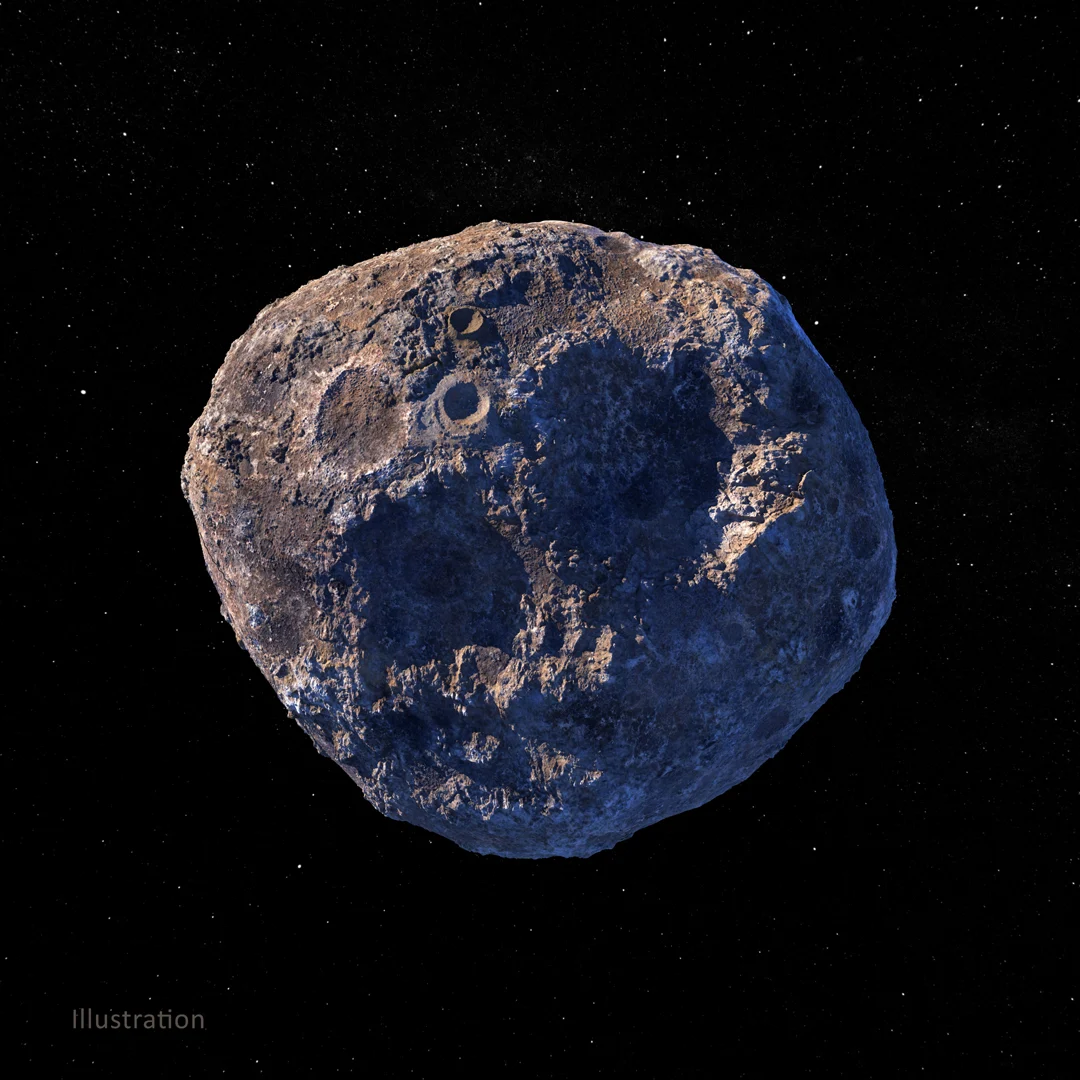
No metallic asteroid sampled. The three sampled asteroids are stony or carbon-rich. NASA describes its Psyche mission as its first to study an asteroid with more metal than rock or ice, with arrival in August 2029 (NASA). See types of asteroids for why "metallic" is still uncertain.
No successful commercial asteroid mission. Private companies have tried, as the next section shows.
Commercial attempts and their outcomes
Planetary Resources and Deep Space Industries. Planetary Resources announced asteroid mining plans in 2012, and Deep Space Industries followed in 2013. Planetary Resources was acquired by ConsenSys in late 2018, and Bradford Space announced its acquisition of Deep Space Industries on 1 January 2019 (The Space Review, January 2019).
AstroForge, Brokkr-1 (2023). AstroForge launched Brokkr-1 in April 2023 to demonstrate refinery technology in space. The team could not establish the command link needed to operate the spacecraft. The refinery demonstration was not completed, and last contact was on 16 May 2024 (AstroForge).
AstroForge, Odin (2025). Odin launched on 26 February 2025 as a secondary payload on the Intuitive Machines IM-2 mission. Its goal was to fly by and image asteroid 2022 OB5. The company received a few faint signals but could not establish communication, and the spacecraft was lost (AstroForge mission debrief; AstroForge).
AstroForge, DeepSpace-2 (planned). In June 2026 AstroForge said it had completed assembly of DeepSpace-2, a 200 kilogram spacecraft. Aerospace America reported a planned launch aboard Intuitive Machines' IM-3 lunar lander, a self-funded cost of around $10 million, and a target chosen from about 28 candidate asteroids thought to be made of metal (Aerospace America, June 2026; SpaceNews, June 2026). The company's mission page gives launch timing as both the fourth quarter of 2026 and 2027 (AstroForge). Its stated main objective is to verify the spacecraft's performance, with an attempt to photograph the target. It is not an extraction mission.
The main open problems
1. Knowing what is there
Most known near-Earth asteroids have no measured composition. The JPL Small-Body Database lists a spectral class for only 327 of 42,794 (JPL SBDB). Bennu's bulk chemistry is similar to the Sun's, with no sign of enrichment in particular metals (Lauretta et al. 2024). Finding concentrations worth extracting is still an open question. We cover this in how many near-Earth asteroids are there and what are asteroids made of.
2. Reaching targets cheaply enough
A 2026 economic model in Acta Astronautica, which tested delta-v targets up to 10 km/s, found that a typical single-trip mining mission with all propellant launched from Earth is feasible only for targets below about 1.8 km/s of delta-v with chemical propulsion, or 4.5 km/s with electric propulsion. Multiple return trips, and making return propellant from asteroid material, improved the results (Dorrington and Olsen 2026).
3. Making the economics work
A 2020 techno-economic analysis found that viability depends first on throughput, meaning how fast material can be mined and processed, and that development cost is a major factor. It suggested several smaller spacecraft per mission could help, and found that returning platinum to Earth depends on how the market reacts to new supply (Hein et al. 2020).
4. Working on loose, weak surfaces
When OSIRIS-REx touched Bennu, the surface behaved like a loose granular bed with almost no cohesion (Walsh et al. 2022). Anchoring, digging, and moving material in microgravity on that kind of surface is unproven. Our Bennu and Ryugu article covers the details.
5. Processing in space
Refining material in space has not been demonstrated on an asteroid mission. AstroForge's planned in-space refinery demonstration on Brokkr-1 was not completed (AstroForge).
6. Legal clarity
In the United States, a 2015 law says a U.S. citizen engaged in commercial recovery of an asteroid resource is entitled to possess, own, transport, use, and sell it, "in accordance with applicable law, including the international obligations of the United States" (51 U.S.C. 51303). How that fits with international law is a separate question this article does not try to settle.
When will asteroid mining start?
None of the agency sources cited here sets a date for commercial asteroid extraction. What published sources do give are dates for the next science and demonstration steps:
| Planned step | Date given | Source |
|---|---|---|
| Tianwen-2 sample return from 2016 HO3 | Around end of 2027 | CAS |
| ESA's Ramses arrives at Apophis | February 2029 (planned launch April 2028) | NASA |
| OSIRIS-APEX arrives at Apophis | June 2029 | NASA |
| Psyche begins its prime mission | August 2029 | NASA |
| Hayabusa2 reaches 1998 KY26 | 2031 | JAXA ISAS |
All of these are science or demonstration missions. They will add the composition, surface, and operations data that any future resource effort would need. Anyone quoting a specific year for commercial asteroid mining is making a forecast, not reporting a plan with funded hardware behind it.
Where Near Earth AI stands
Near Earth AI is an early-stage research and development company. Our concept is survey-first prospecting: characterize asteroids remotely, rank candidates with their uncertainties stated, and validate with small samples long before any extraction. We are researching how that could work. We have not found, surveyed, ranked, or sampled any asteroid. The missions and studies above are the work of the agencies, companies, and researchers cited. Our article on why survey first explains the concept.
FAQ
Has anyone mined an asteroid?
No. Agencies have returned samples for science, about 5.4 grams from Ryugu (JAXA) and 121.6 grams from Bennu (NASA), but no one has extracted asteroid resources for use or sale.
Is asteroid mining legal?
In the United States, 51 U.S.C. 51303 entitles U.S. citizens to asteroid resources they obtain through commercial recovery, subject to applicable law and U.S. international obligations (U.S. Code).
What is the biggest obstacle to asteroid mining?
There is no single one. Published economic studies point to throughput, development cost, and trajectory cost (Hein et al. 2020; Dorrington and Olsen 2026), and most asteroids still have no measured composition.
When will asteroid mining start?
No agency has published a start date. The next dated milestones are science missions between 2027 and 2031, listed in the table above.
Sources
- T. Nakamura et al., Itokawa dust particles: A direct link between S-type asteroids and ordinary chondrites, Science 333 (2011).
- JAXA, Asteroid Explorer Hayabusa2, accessed 21 October 2026.
- NASA, OSIRIS-REx mission page, accessed 21 October 2026.
- D. S. Lauretta et al., Asteroid (101955) Bennu in the laboratory, Meteoritics and Planetary Science (2024).
- China National Space Administration, Tianwen-2 launch announcement (in Chinese), 29 May 2025.
- Chinese Academy of Sciences, China Launches Tianwen-2 to Retrieve Asteroid Samples, 29 May 2025.
- NASA, Psyche mission overview, accessed 21 October 2026.
- J. Foust, The asteroid mining bubble has burst, The Space Review, 7 January 2019.
- AstroForge, An update on Mission 1 and Mission 2, accessed 21 October 2026.
- AstroForge, Odin mission debrief and Odin mission page, accessed 21 October 2026.
- Aspen Pflughoeft, AstroForge preps for second attempt at reaching an asteroid, Aerospace America, 15 June 2026.
- J. Foust, AstroForge completes DeepSpace-2 spacecraft, SpaceNews, 4 June 2026.
- AstroForge, DeepSpace-2 mission page, accessed 21 October 2026.
- NASA JPL, Small-Body Database Query API, queried 21 October 2026.
- Scott Dorrington and John Olsen, Parametric economic modelling of asteroid mining architectures, Acta Astronautica 241 (2026).
- A. M. Hein, R. Matheson, D. Fries, A techno-economic analysis of asteroid mining, Acta Astronautica 168 (2020).
- K. J. Walsh et al., Near-zero cohesion and loose packing of Bennu's near subsurface revealed by spacecraft contact, Science Advances 8 (2022).
- 51 U.S.C. 51303, Asteroid resource and space resource rights, added by Pub. L. 114-90 (2015).
- NASA, OSIRIS-APEX mission page and Apophis exploration, accessed 21 October 2026.
- JAXA ISAS, Asteroid Explorer Hayabusa2, accessed 21 October 2026.